
-
2103 Room NO.322 Xinggang One Road, Haicang District, Xiamen Fujian, Chiny

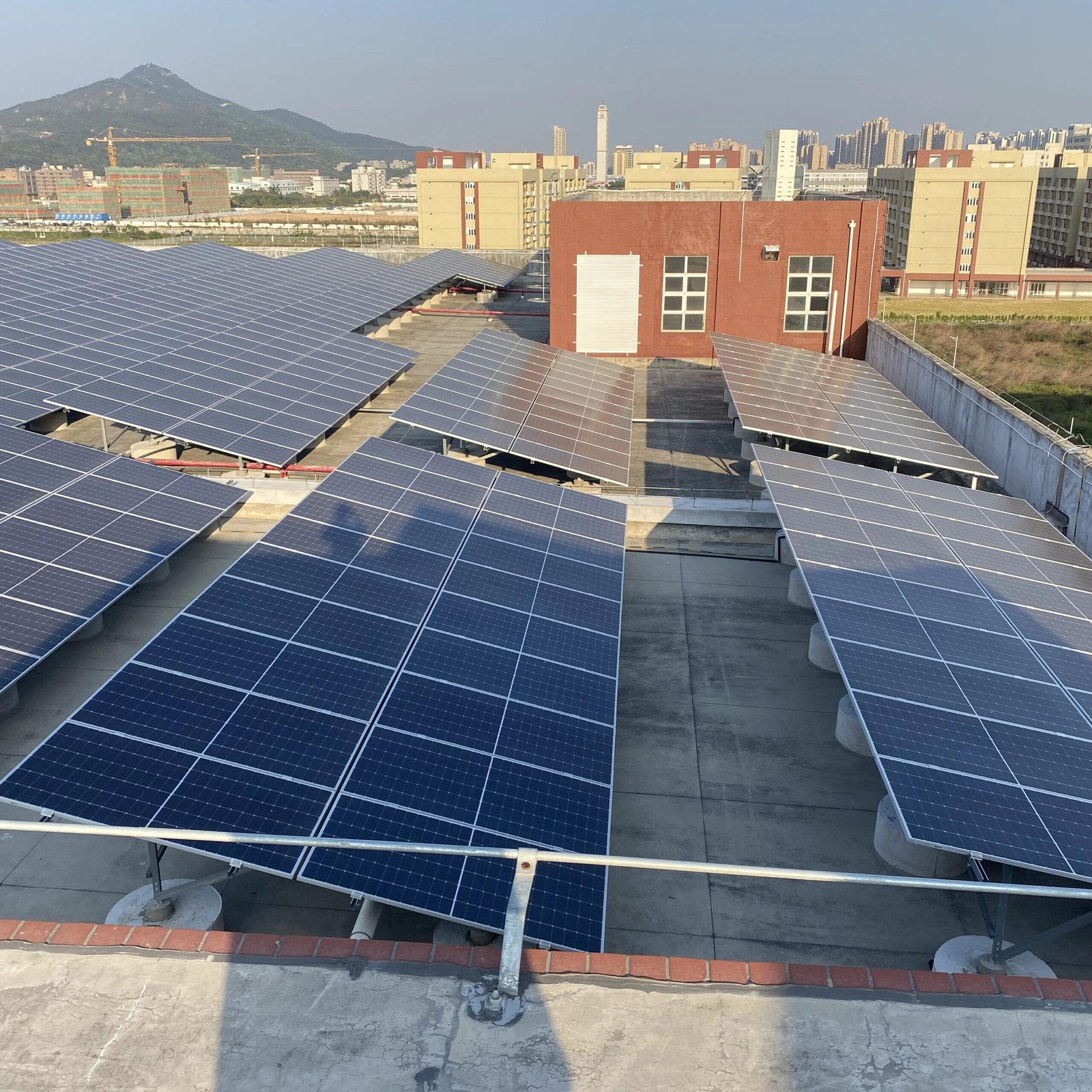
Understanding PV Systems: Types, Structures, and Installation Methods
Table of Contents
What is PV (Photovoltaic)?
The term PV stands for Photovoltaic, meaning the generation of electricity using sunlight. In the solar energy sector, PV often refers to solar cells or solar energy systems.
While the term “PV” is still relatively new in Japan, it is widely used internationally to describe solar technology. A PV System typically includes solar modules, mounting structures, connection boxes, inverters, and distribution boards.
Advantages and Disadvantages of PV Systems
Advantages
- Lower electricity costs
- Protection against rising energy prices
- Reduction of CO₂ emissions
- Backup energy during emergencies
- Earnings through surplus power sales
Disadvantages
- Initial setup costs
- Maintenance effort and costs
- Requires sufficient installation space
- Power output affected by weather and location
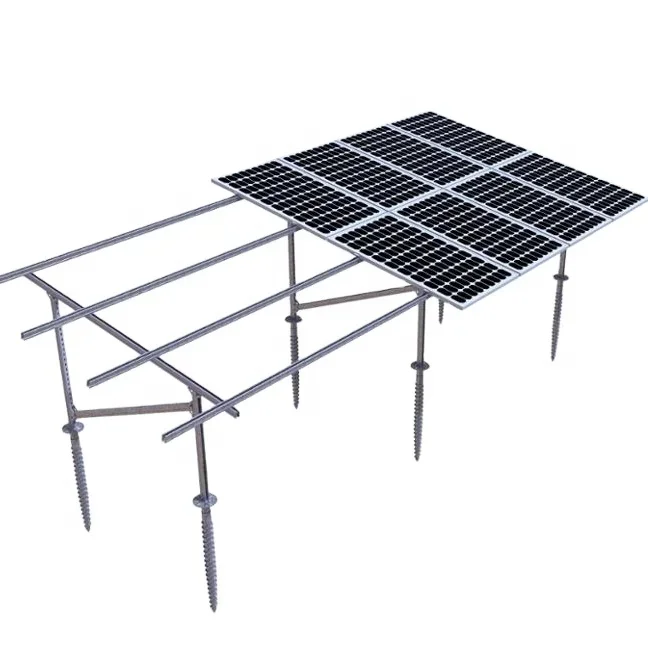
Learn more about our Naziemny system montażu paneli słonecznych.
Types of PV Systems
Independent PV Systems (Off-Grid)
These systems are not connected to utility grids and are ideal for remote locations such as mountainous regions or isolated islands. They often require battery storage to supply electricity during nights or cloudy weather.
Key Benefits:
- Low installation cost
- Power supply during grid outages
Challenges:
- No grid electricity sales
- Limited government subsidies
Grid-Connected PV Systems (On-Grid)
These systems are linked to utility grids, enabling both electricity sales and purchases.
Key Benefits:
- Sell surplus electricity to the grid
- Eligible for many subsidy programs
Challenges:
- Higher initial investment
- Electricity might not be available during outages without a backup system

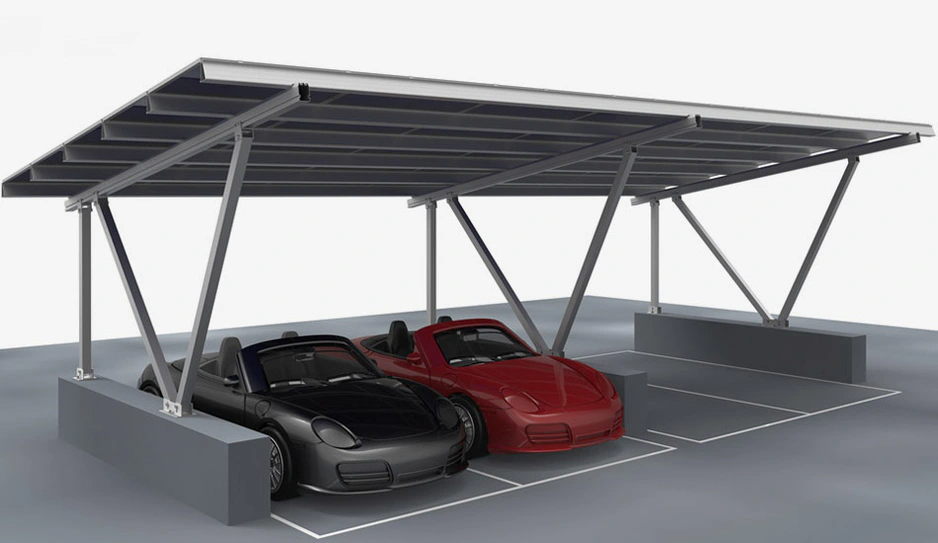
Check out our Solar Carport Mounting Systems.
Structure of Industrial PV Systems
A typical industrial PV system includes:
| Equipment | Description |
|---|---|
| Solar Modules | Panels that generate electricity from sunlight |
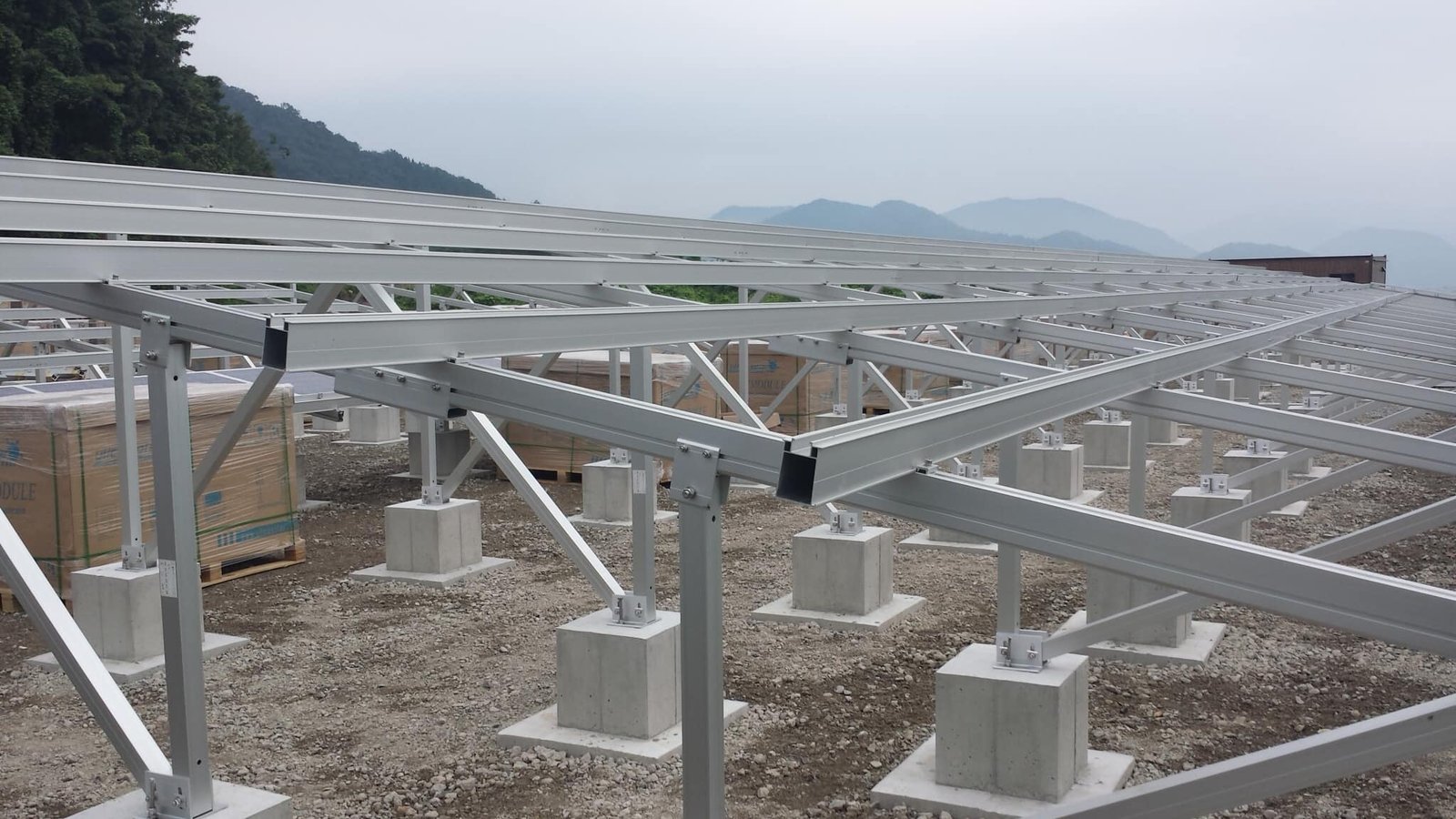
| Mounting Systems | Structures that hold panels at the correct angle |
| Junction Boxes | Combine wiring from multiple panels |
| Inverters | Convert DC to usable AC power |
| Distribution Panels | Manage electricity flow within buildings |
| Meters | Measure energy bought and sold |
Explore various mounting options like Roof Solar Mounting Systems and Floating Solar Mounting Systems.
Installation Methods for PV Systems
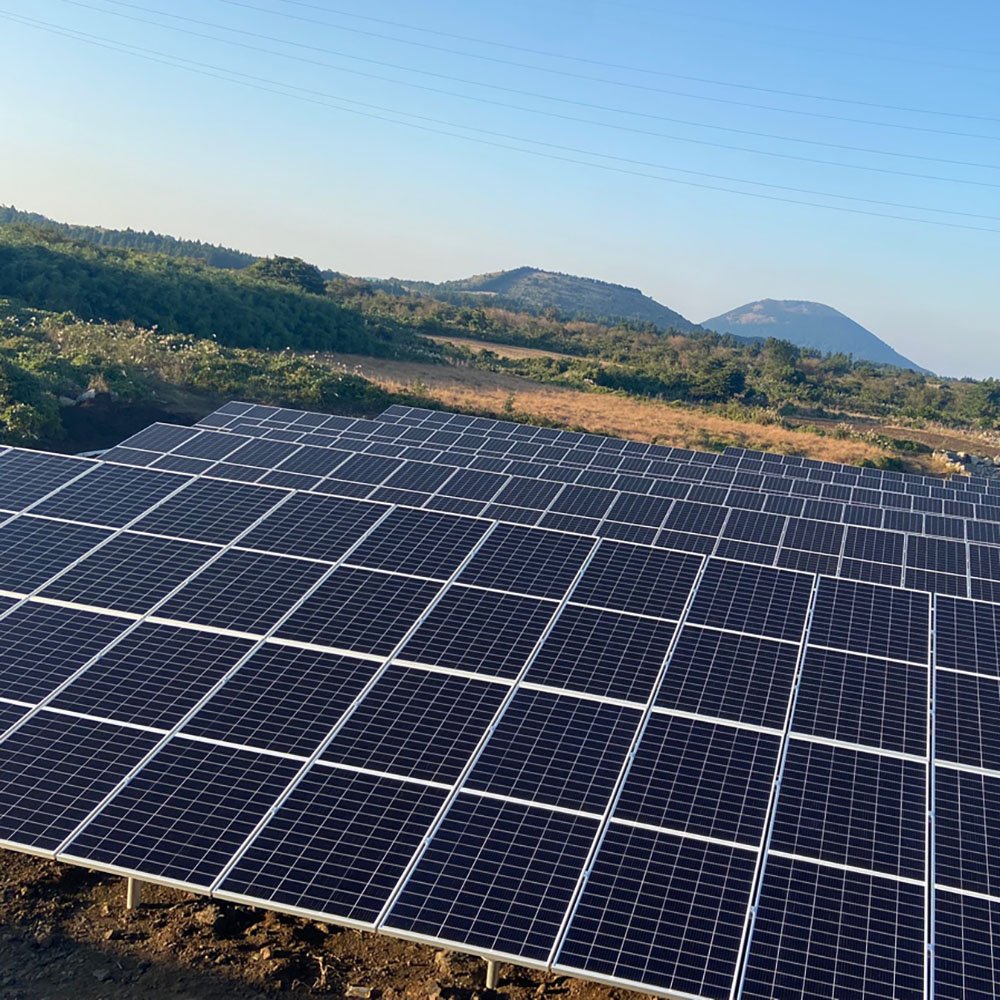
Ground-Mounted Systems
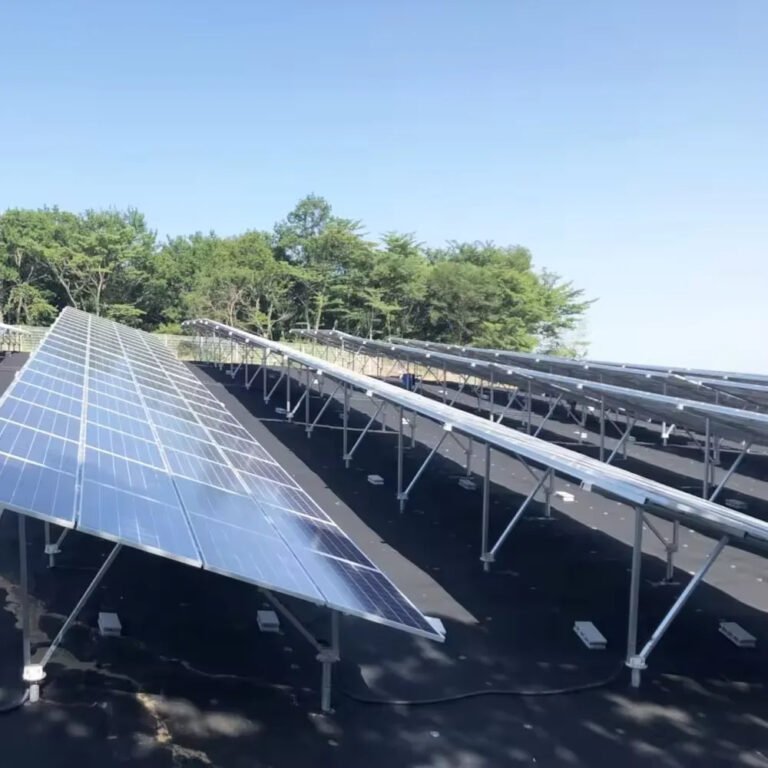
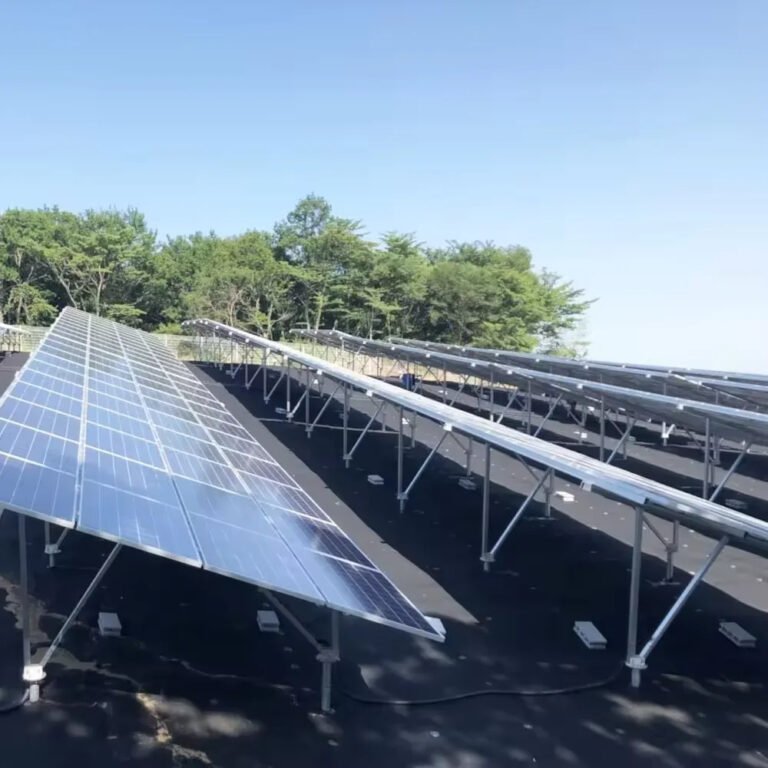
Installed directly on land, ideal for large solar farms and unused industrial land.
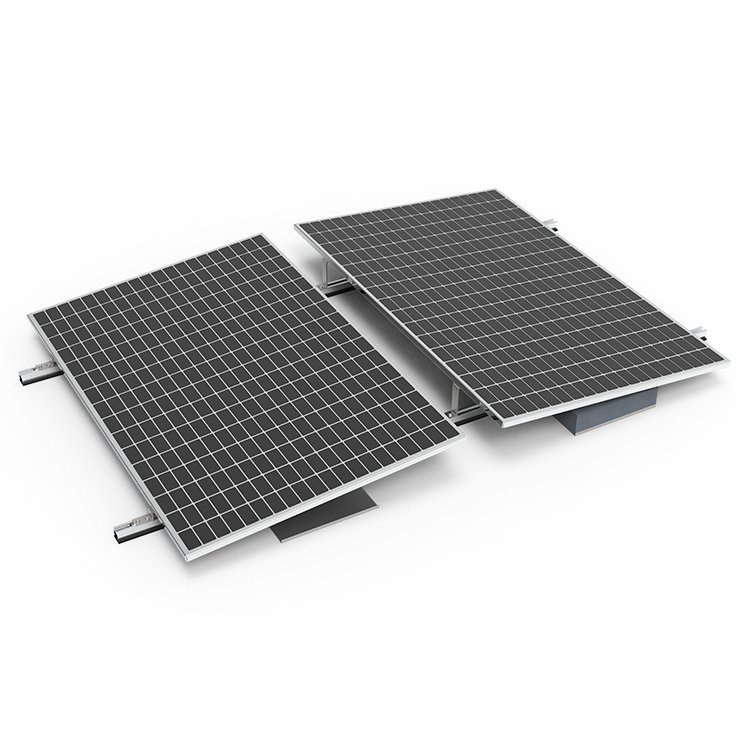
Rooftop Systems
Deployed on factory or commercial building roofs, making efficient use of space.
Solar Carports
PV panels mounted above parking spaces, generating energy while protecting vehicles.
Agrivoltaic Systems
Dual-use installations allowing farming underneath solar panels. Learn more about our Agricultural Farmland Solar Mounting Systems.

Discover Agricultural Solar Mounts.
Differences Between Solar Cells, Modules, and Arrays
- Cell: The smallest photovoltaic unit.
- Module: A panel combining multiple cells.
- Array: A group of modules connected together.
Monocrystalline vs. Polycrystalline Solar Panels
- Monocrystalline: Higher efficiency, higher cost.
- Polycrystalline: Slightly lower efficiency but lower cost and widely used.
Three Major Ways for Companies to Introduce PV Systems
| Method | Overview | Initial Cost | Maintenance |
|---|---|---|---|
| Ownership | Full control and revenue from system | High | Self-managed |
| PPA Model | Third-party owns and maintains, company buys electricity | Low/None | Provider-managed |
| Leasing | Lease system, pay a rental fee | Low/None | Provider-managed |
Onsite PPA vs. Offsite PPA
- Onsite PPA: Panels installed on your own property.
- Offsite PPA: Panels installed elsewhere; electricity transmitted to your site.
Conclusion: Promote Cost Saving and Sustainability with PV Systems
Implementing a PV system—whether ground-mounted, rooftop, or carport—helps reduce energy costs and environmental impact. Careful selection of the right mounting systems and installation methods ensures long-term benefits.
Ready to start? Explore these resources:



 English
 Korean
 Japanese
 German
 French
 Greek
Greek Arabic
 Russian
 Thai
Thai Vietnamese
 Italian
 Spanish
 Portuguese
 Dutch
Dutch Bengali
 Croatian
 Czech
Czech Danish
 Hungarian
 Malay
Malay Persian
 Polish
 Romanian
 Serbian
 Swedish
 Afrikaans
 Kazakh
 Uzbek
Uzbek